Only with the science of learning, the teacher can reach everybody in the classroom.
In every classroom
Every student has the organ that learns.
Nobody taught them according to how their brain learns.
The cost of the gap
Start with 100 children in Grade 1. See what remains.
Nepal's education pipeline. National estimates based on MOE enrollment data.
Follow 100 children from Grade 1. Watch what the system does to them.
100
Grade 1 — Enrolled
start
83
Grade 5 — Primary complete
−17
68
Grade 8 — Lower secondary
−15
55
Grade 10 — Secondary enroll
−13
37
SEE Pass — ~67% pass rate
−18
28
Grade 12 — Higher secondary
−9
13
College — Degree enrollment
−15
6
Formal employment
−7
94 out of 100.
The system is not failing by accident. It was never designed to carry everyone through.
Source
Nepal MOE Flash Report 2022/23 · World Bank Human Capital Review 2025 · NEB 2082. National cohort estimates.
Nepal MOE Flash Report 2022/23 · World Bank 2025
The problem was never just resources.
Nepal already spends on schools, benches, and books. The gap lives somewhere else, where nobody thought to look.
Teachers were never taught how a brain learns.
The teachers are not the problem. The system that trained them without ever teaching them how learning actually works is the problem.
The cure already exists
The brain has rules.
It is the foundational biology — every human has the same brain and all of us learn the same way. Learning styles are a myth. These five pillars of learning are supported by tens of thousands of neuroscientists.
01Attention→
The brain cannot learn what it does not process. Attention is the gateway to everything that follows.
02Active Engagement→
The brain does not learn by receiving. It learns by predicting, testing, and correcting. A passive classroom is a forgetting machine.
03Error and Feedback→
A corrected mistake releases dopamine. Error is the strongest learning signal there is. Teachers who fear wrong answers are removing the brain's most powerful tool.
04Consolidation→
Learning sets during sleep and spaced retrieval. Without consolidation, a lesson taught on Monday is gone by Friday. Most lessons are never retrieved again.
05Creative Expression→
Making, showing, and owning what was learned. When children create with what they know, they own it. This is how temporary understanding becomes permanent knowledge.
Stellaa's own fifth pillar
Our portfolio so far
91
Learning Designers.In Biratnagar, Damak, and Dharan. Three municipalities. One year.
12
Schools.That changed the way they think about the classroom.
4
Trainings completed.Three self-funded. One with external support.
Flagship Pilot
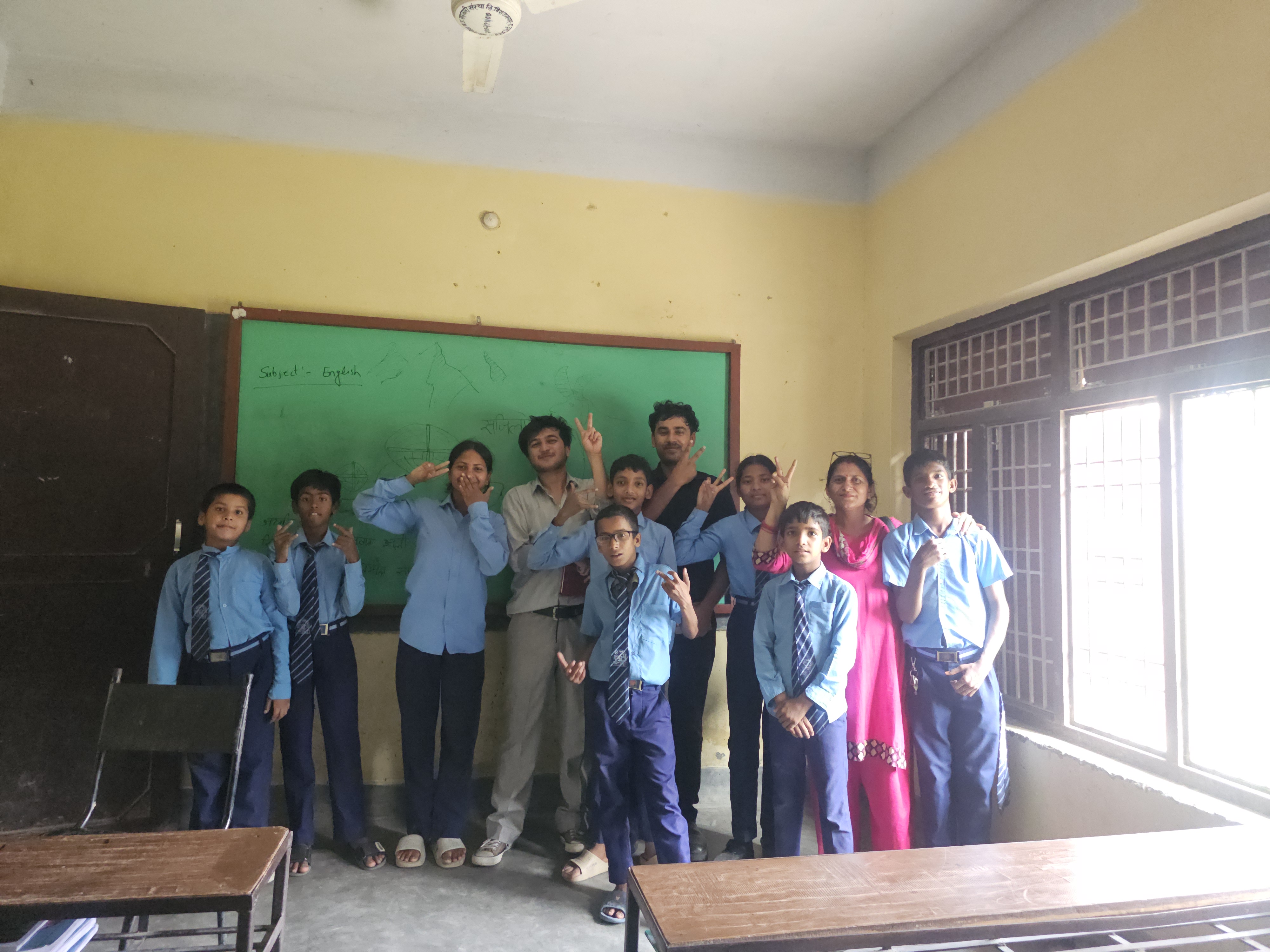
Birat Bahira Deaf School, Biratnagar
Primary Teachers are volunteering to transform the learning culture of their classes, given the freedom of no exams. We are piloting a neuroscience of learning-based classroom. Neuroscience of Learning is so foundational brain science, even deaf children learn by it — because the brains of deaf people learn the same way as all of us.
INITIAL OUTCOMES — Biratnagar Pilot, 2024
In their own words
Ask the teachers who were there.
"After the training I started thinking about attention before I think about content. What will make this moment worth noticing? It changed how I plan everything."
It is making every brain in the classroom learn. The teacher must become a Learning Designer.
Two batches · 90 days of practice · One transformation
Batch 1
The Brain That Learns
Five modules. The neuroscience every teacher must own before designing a single lesson.
01
Brain Fundamentals
The brain that learns
The organ that does the work. Its structure, its limits, and the rules it follows without exception. Nothing else in this program makes sense without this foundation.
Dopamine, acetylcholine, norepinephrine — the messengers that make learning stick. When a teacher understands the chemistry, she can design moments the brain remembers.
Dopamine pathwaysStress & cortisolReward prediction errorsFlow states
04
Memory
How thoughts become permanent
Encoding, consolidation, retrieval — the three-phase architecture. Without this, Monday's lesson is gone by Friday. Most lessons are never retrieved again.
Working memoryLong-term potentiationSpaced repetitionThe testing effect
05
Becoming a Change Agent
Leadership in your school
Knowledge without action changes nothing. Carry the science back to your school — lead the shift from the inside, not wait for it from above.
Influencing without authorityBuilding coalitionsThe first 30 daysSustaining momentum
Between Batches
90 Days of Practice
The Classroom Designer Handbook goes live. Teachers return to their classrooms and test the five pillars on real students with real lessons.
Design
Build lessons around the five pillars. Use the Handbook as your architecture guide.
Test
Run the experiments. Watch what happens when attention comes first.
Document
Record what worked. Bring the evidence back to Batch 2.
"The gap between knowing and doing is where real learning lives."
Batch 2
The Teacher as Designer
Three modules. From understanding the brain to designing for it.
06
Motivation
Dopamine & Flow
Dopamine and flow — the brain's reward system and its optimal state. Stack intrinsic motivators so every lesson becomes something the brain seeks.
Dopamine circuitsIntrinsic vs extrinsicFlow channel designReward stacking
07
Curiosity
The brain's prediction engine
Not a trait — a biological drive. When the prediction gap opens, learning becomes involuntary. The most powerful teaching tool is the one you already have.
Prediction errorInformation gap theoryCuriosity circuitsPriming the seek system
08
Creativity
Creative networks
Free creative expression. Map the creative networks of the brain. Design a creative school — not as an add-on, but as the architecture of learning itself.
Default mode networkDivergent thinkingCreative school designAssessing creativity
Final Phase
Integration
The science, the practice, the commitment — unified into one declaration of who you have become.
I
Build the Blueprint
Construct your Flourishing Classroom Blueprint — a complete, living document of how you will teach from this point forward.
II
Public Commitment
Stand before your peers and declare what you will change. The public act makes the private intention real.
III
Certification
You are no longer just a teacher. You are a Learning Designer. The certificate names what you have become.
The White Paper
The Full Argument
A child born in Nepal today reaches only half of their potential. By the time they look for work, 82 percent is gone. The science is ready. The program works. The only thing missing is you.
No slogans. No claims. People and places you can look up.
Flagship pilot
Birat Bahira Deaf School, Biratnagar
Teachers working with deaf children, trained in the neuroscience of how the brain learns. The training did not adapt the science for deaf learners. It trained teachers in the universal principles, because the brain learns the same way regardless of how information enters it.
Preliminary outcomes — Biratnagar, 2024
9of 11 teachers redesigned at least one lesson within the first week.
78%reported students were more attentive during the redesigned lessons.
100%said they would not go back to planning without thinking about attention first.
The teachers
They came. They left different.
Shova Pyakurel
Birat Bahira Secondary School, Biratnagar
"I used to begin every lesson with the topic. Now I begin with the question: what will make this worth noticing? That shift changed everything else."
Training photographs
In the room where it happens.
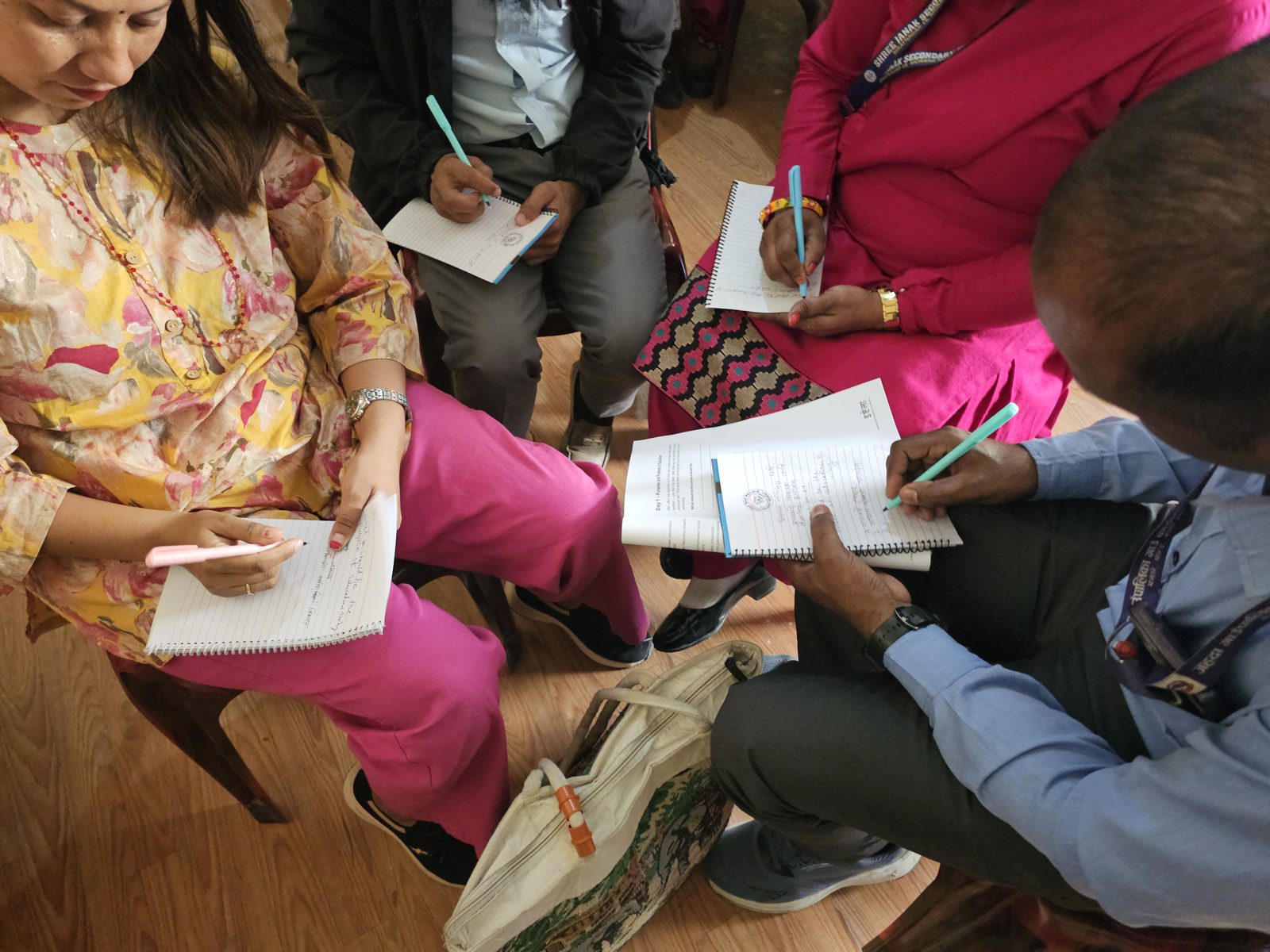
Teachers writing in notebooks during a Stellaa training session.
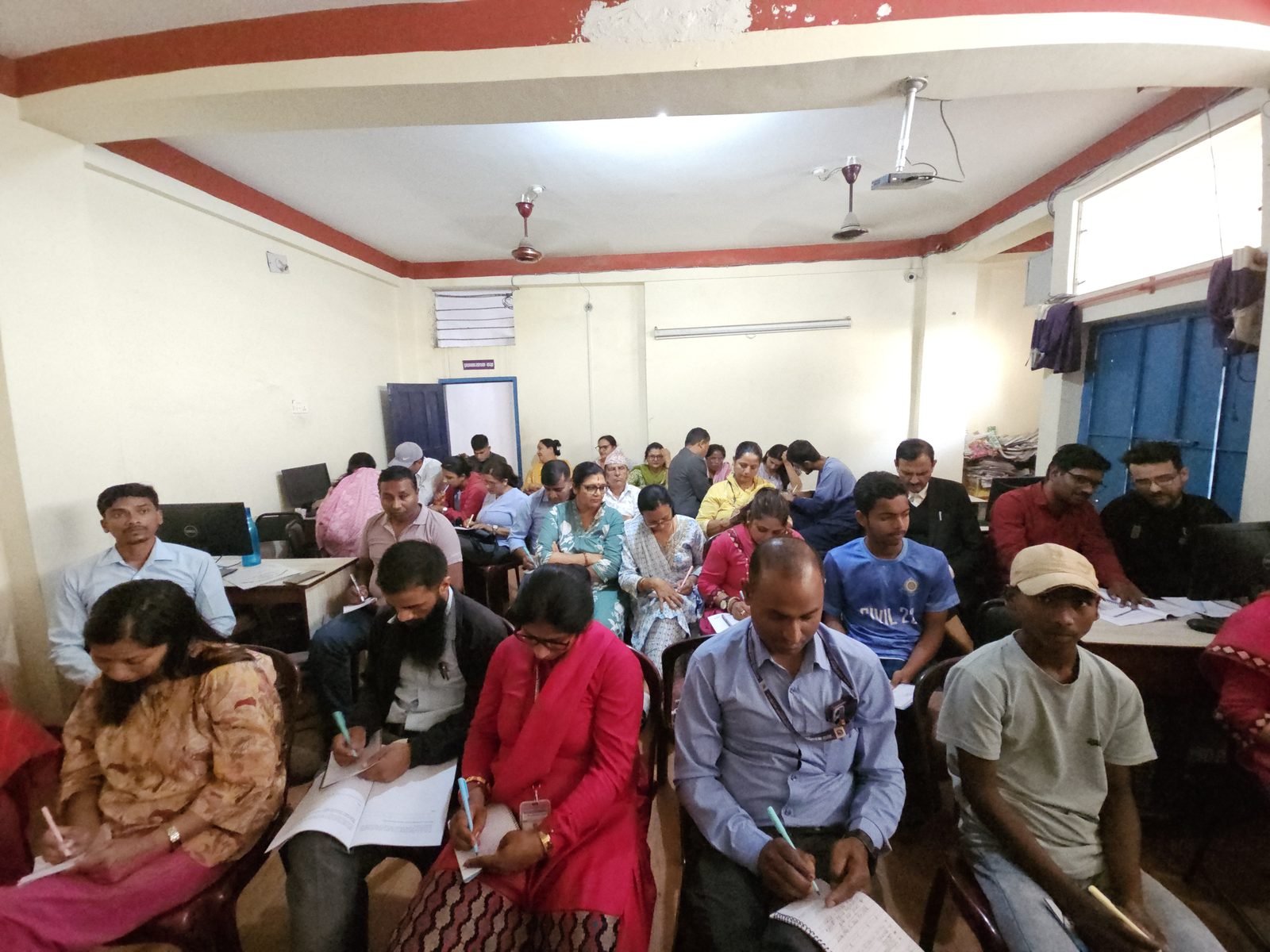
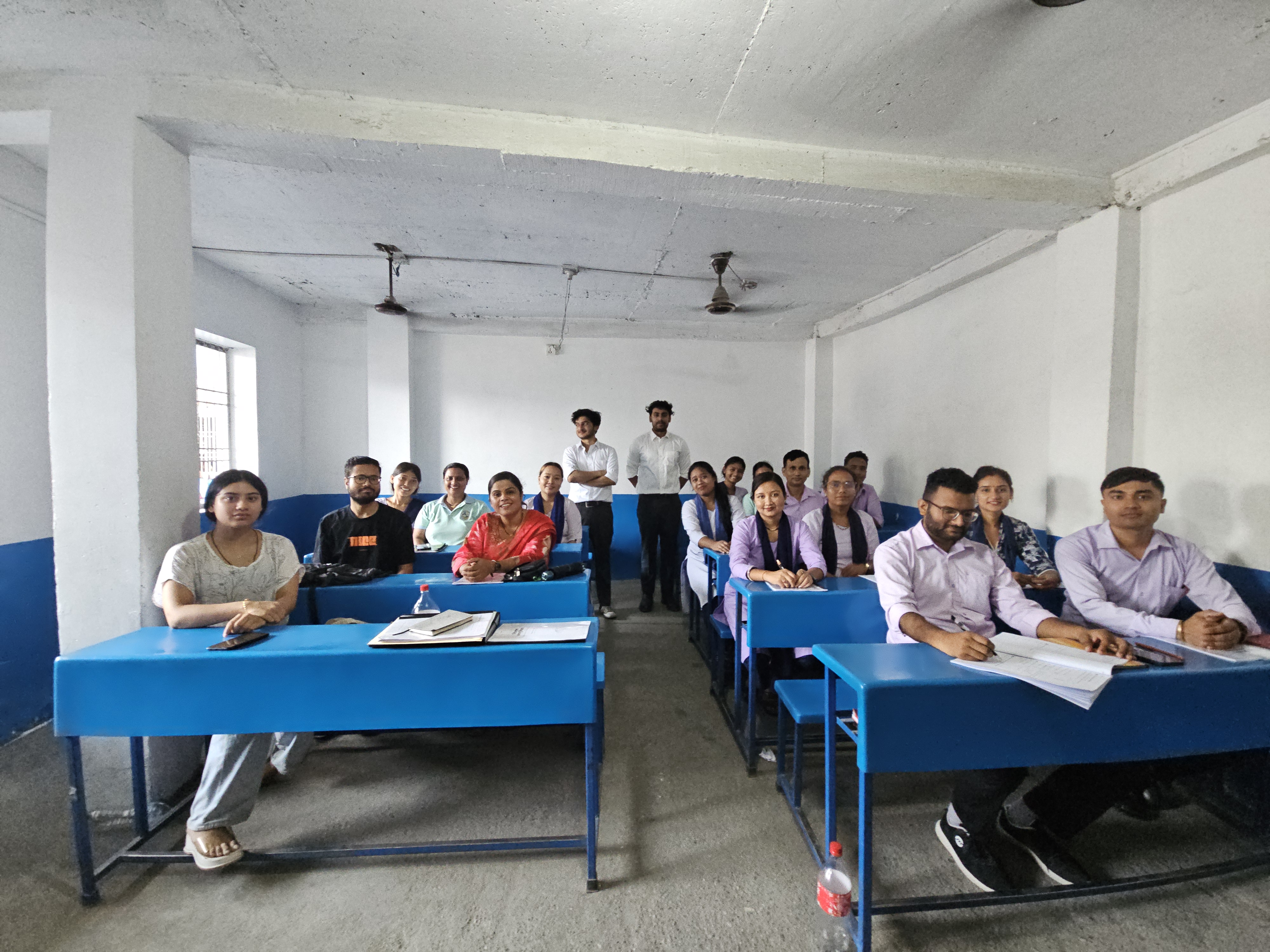
A full classroom of teachers writing during the neuroscience training.
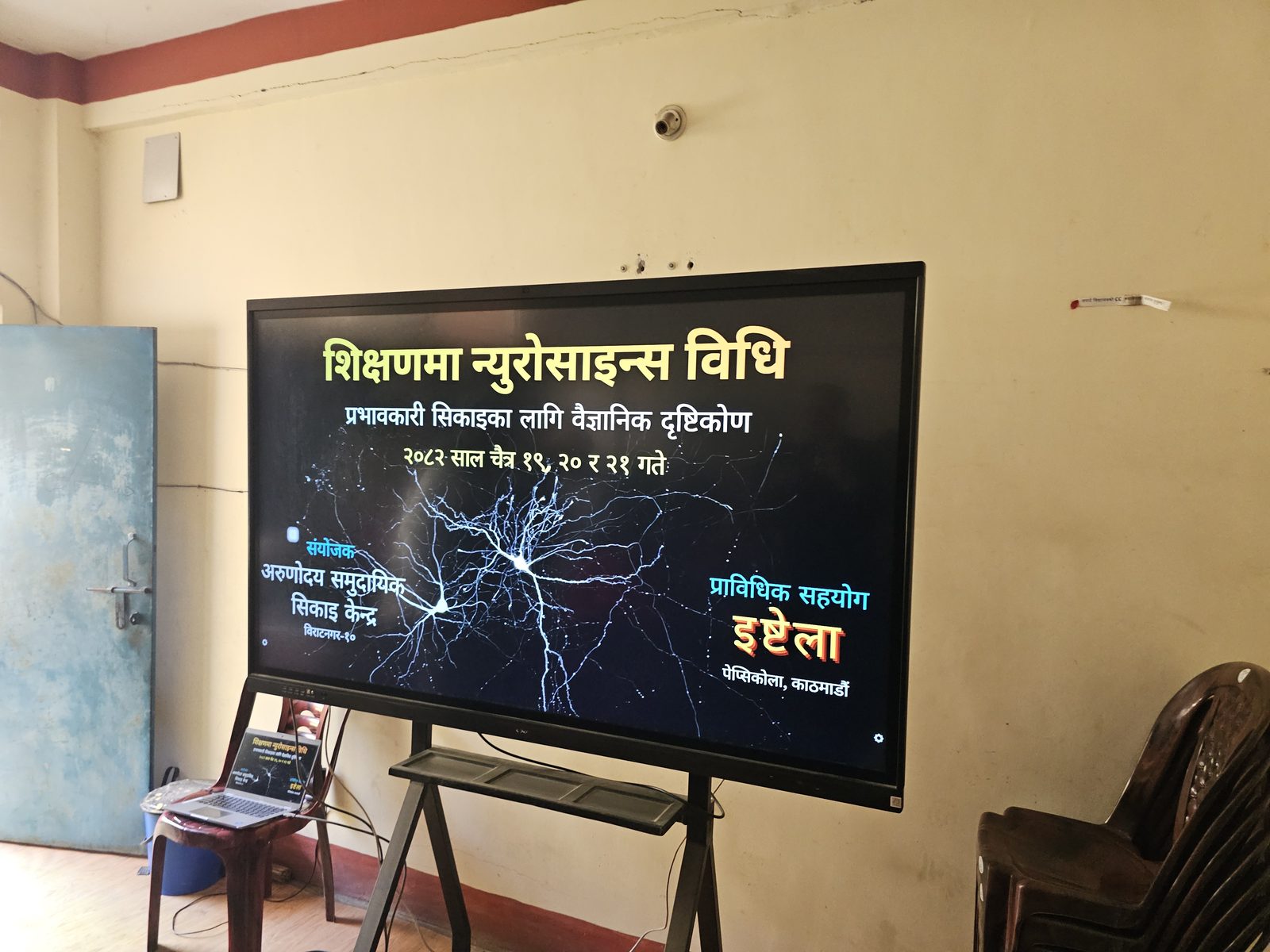
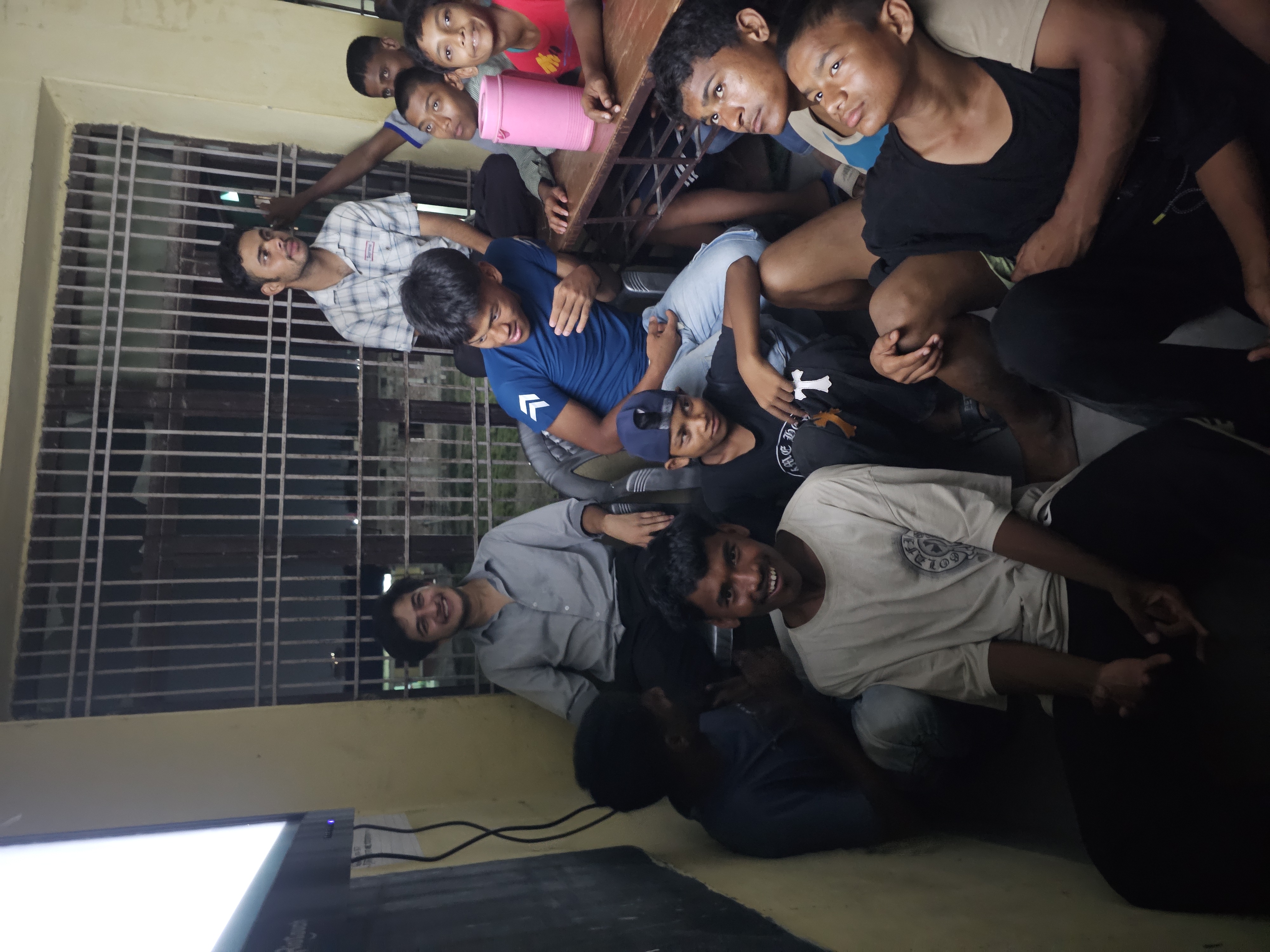
The training screen at Arunodaya Community Learning Centre, Biratnagar.
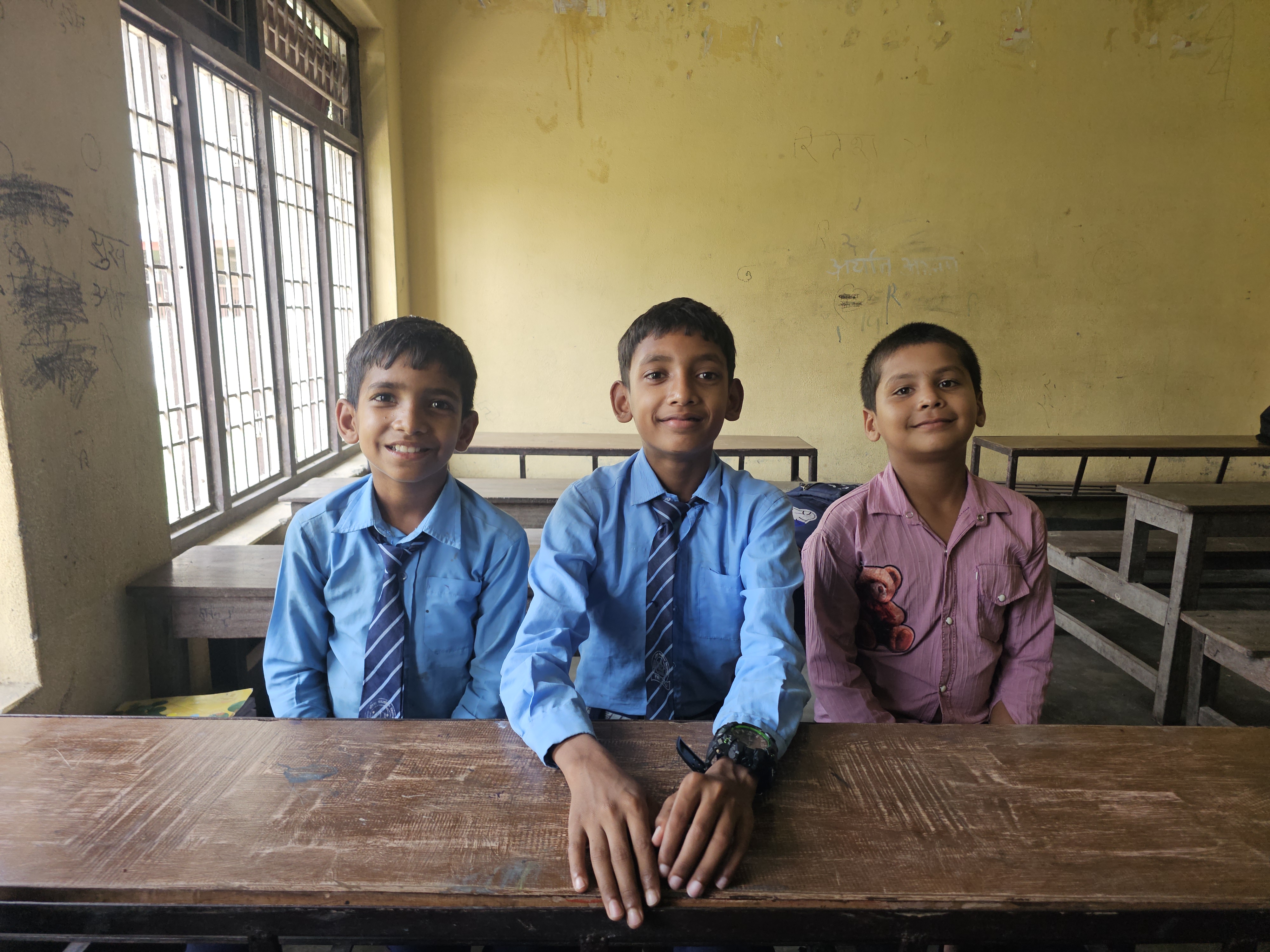
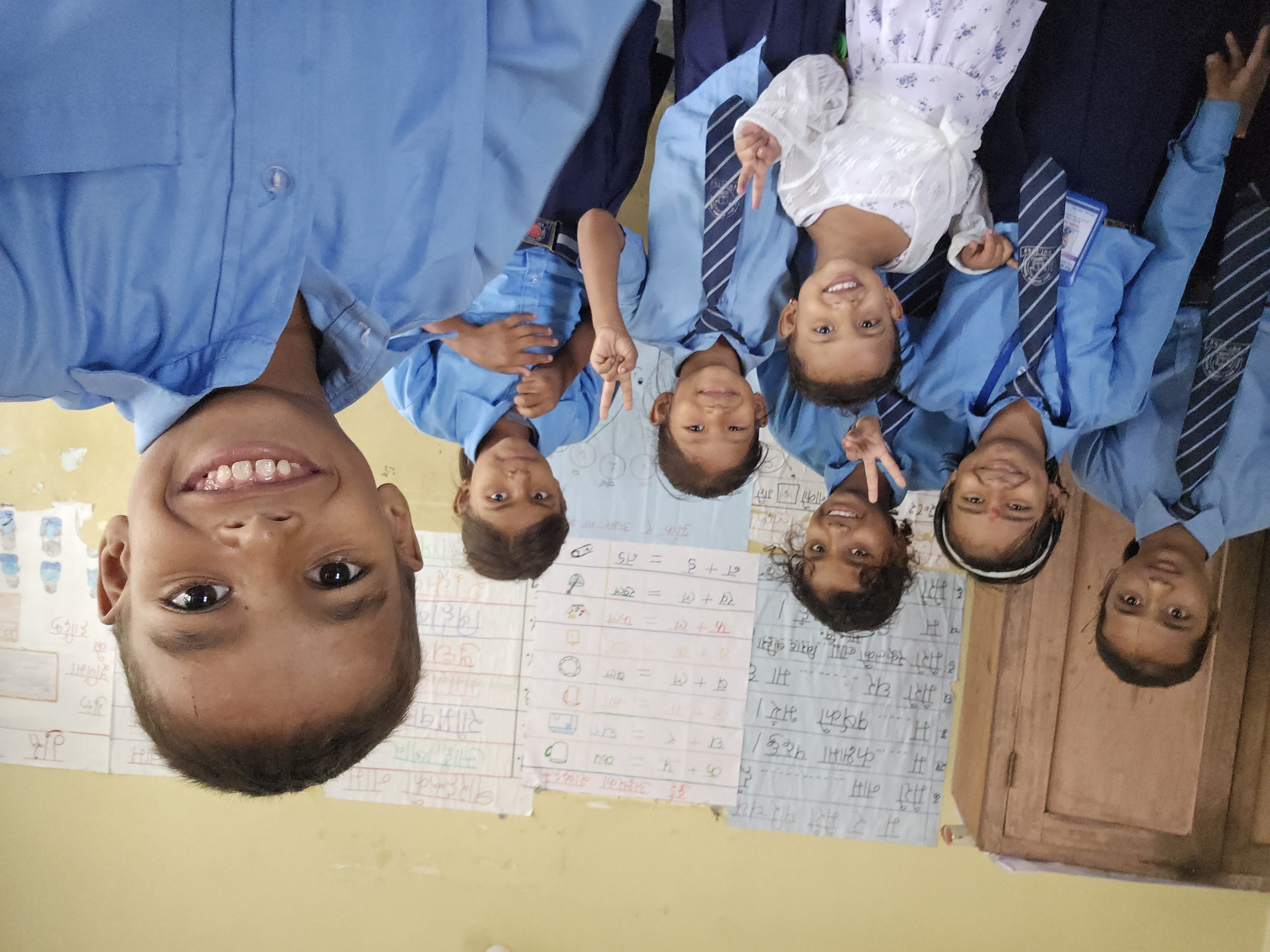
Three students at Birat Bahira Deaf School, Biratnagar.
Students and the Stellaa team in the classroom at Birat Bahira.
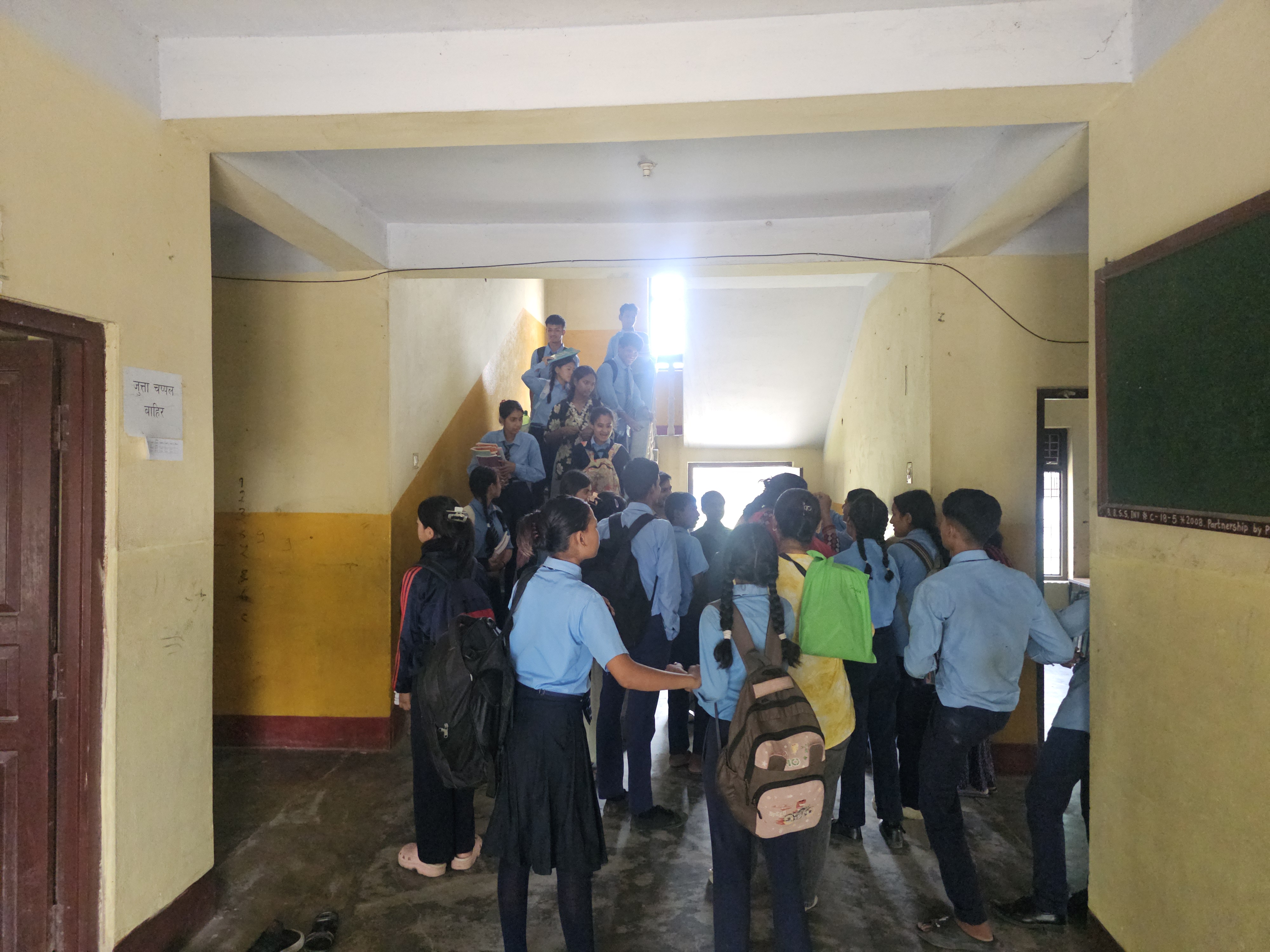
Students in the hallway at Birat Bahira Deaf School.
Students looking down at the camera, worksheets on the floor.
Boys gathered around a screen at Birat Bahira.
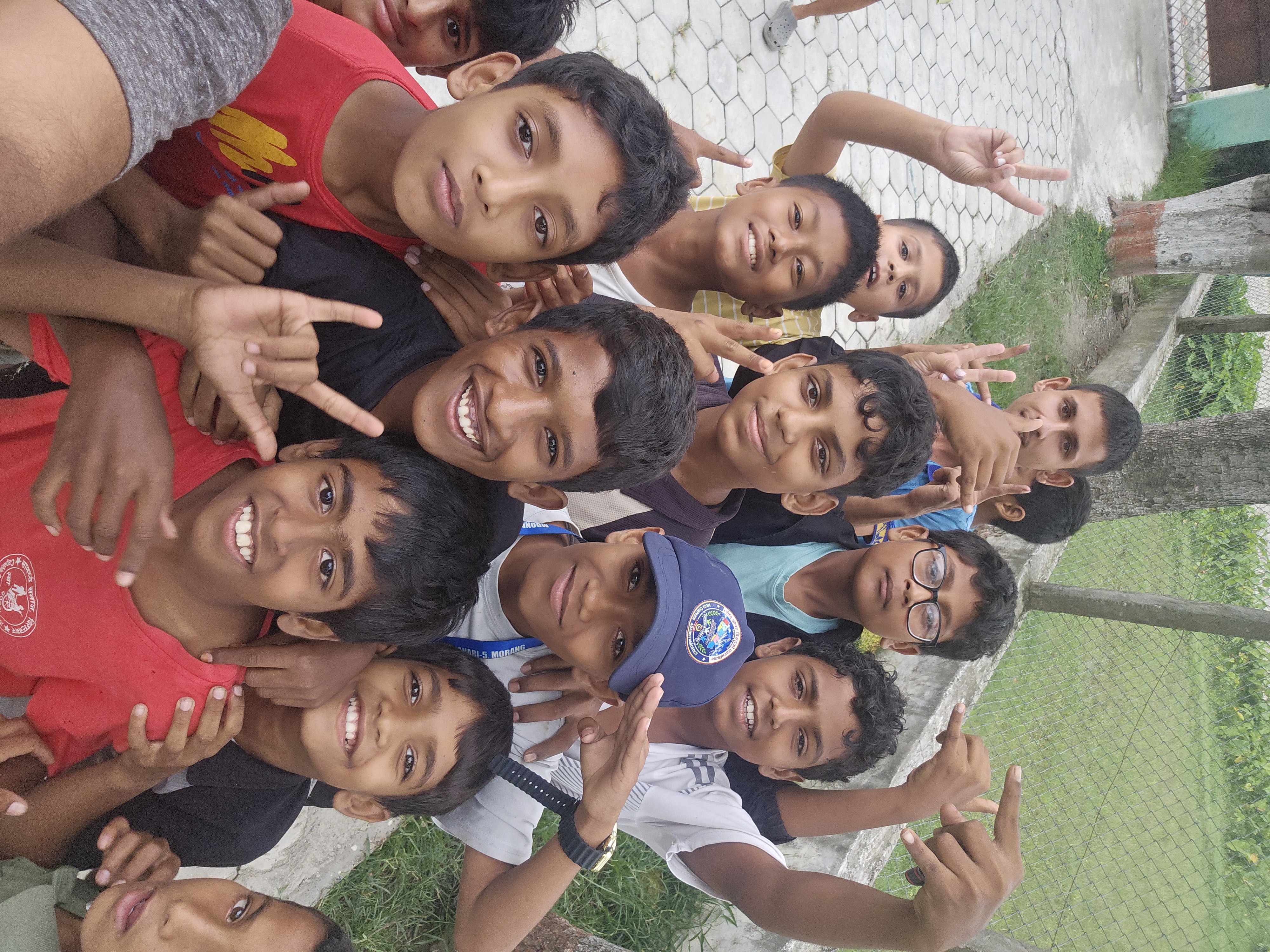
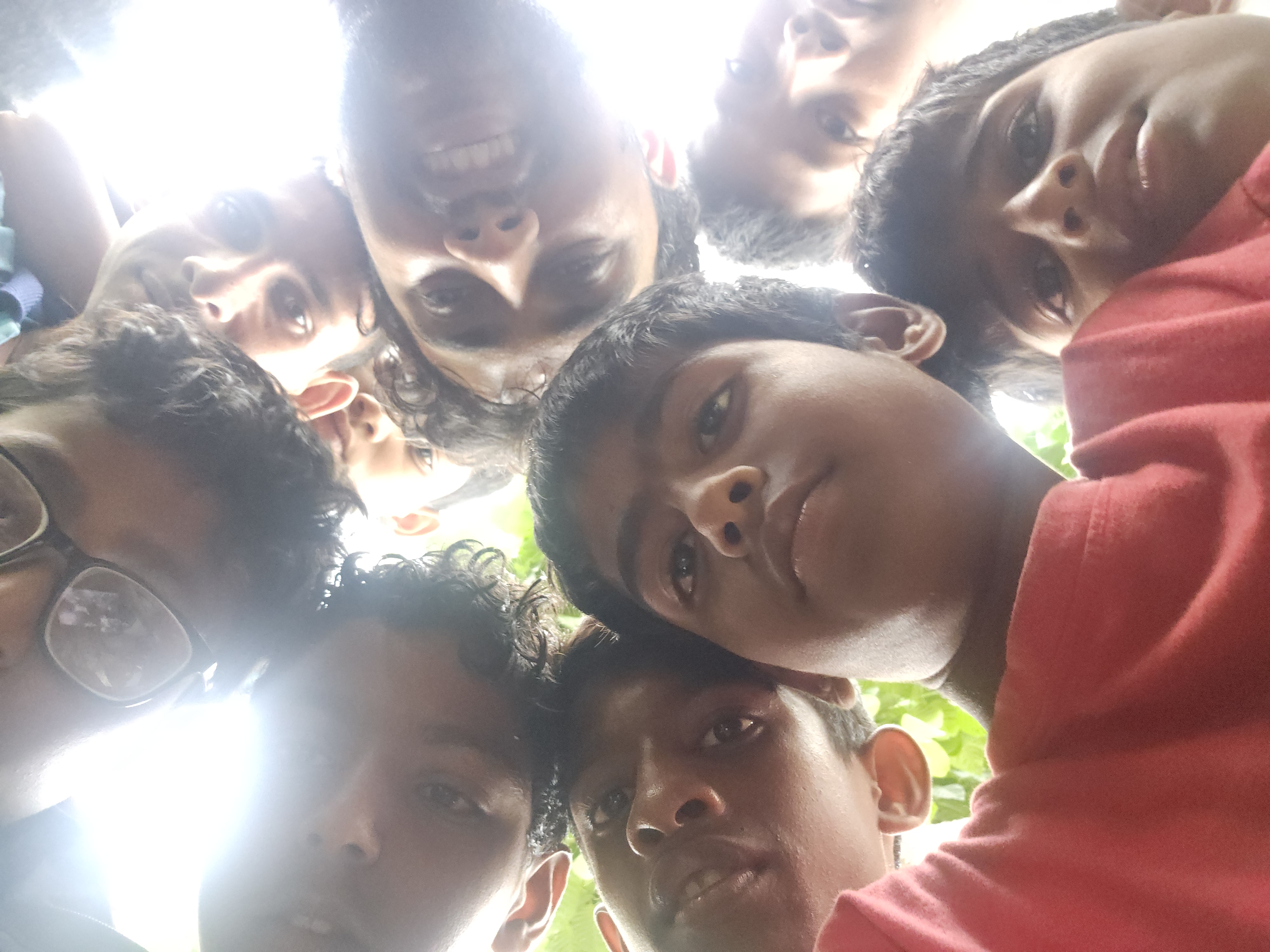
The team and students huddle for a group selfie.
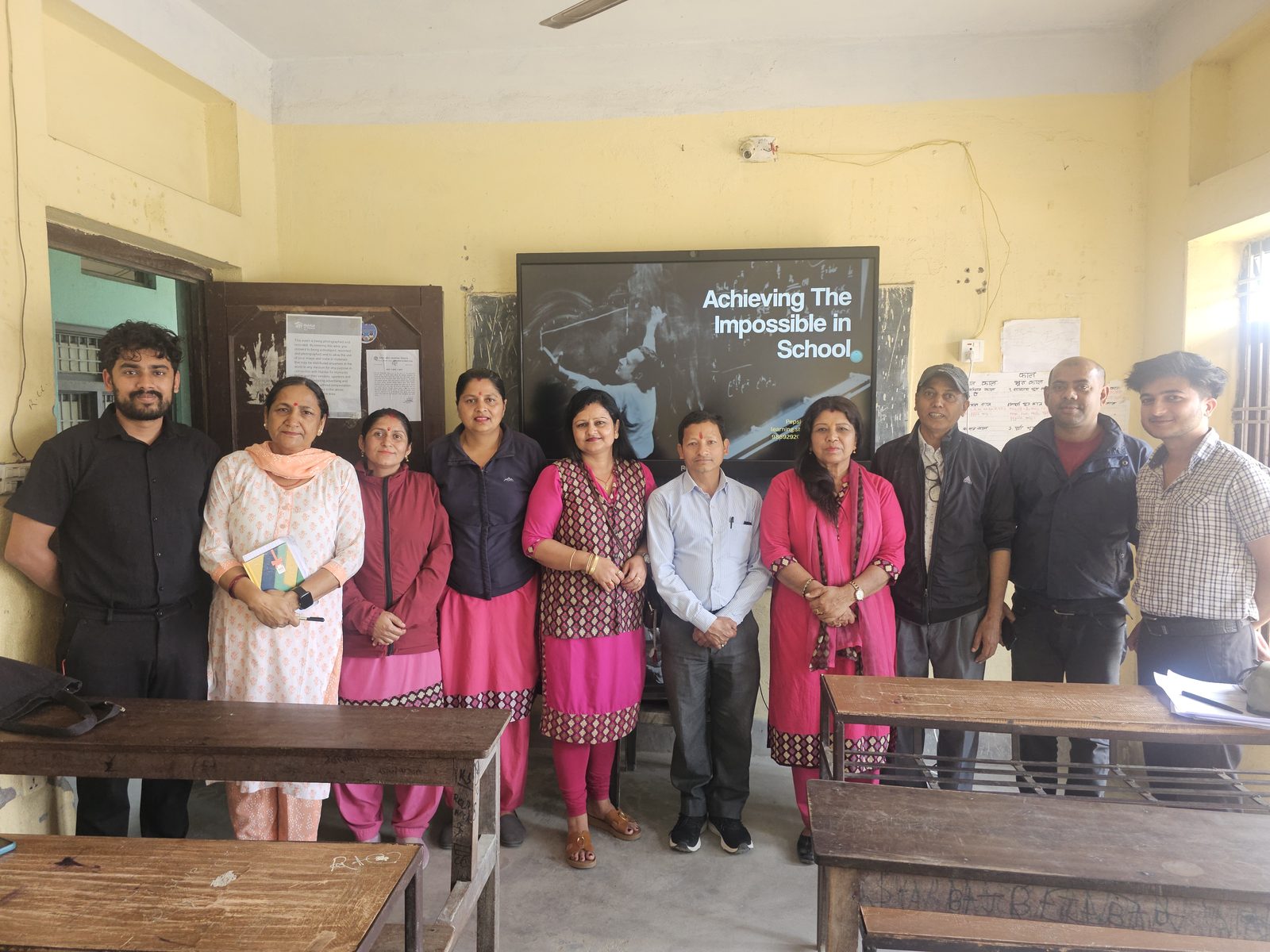
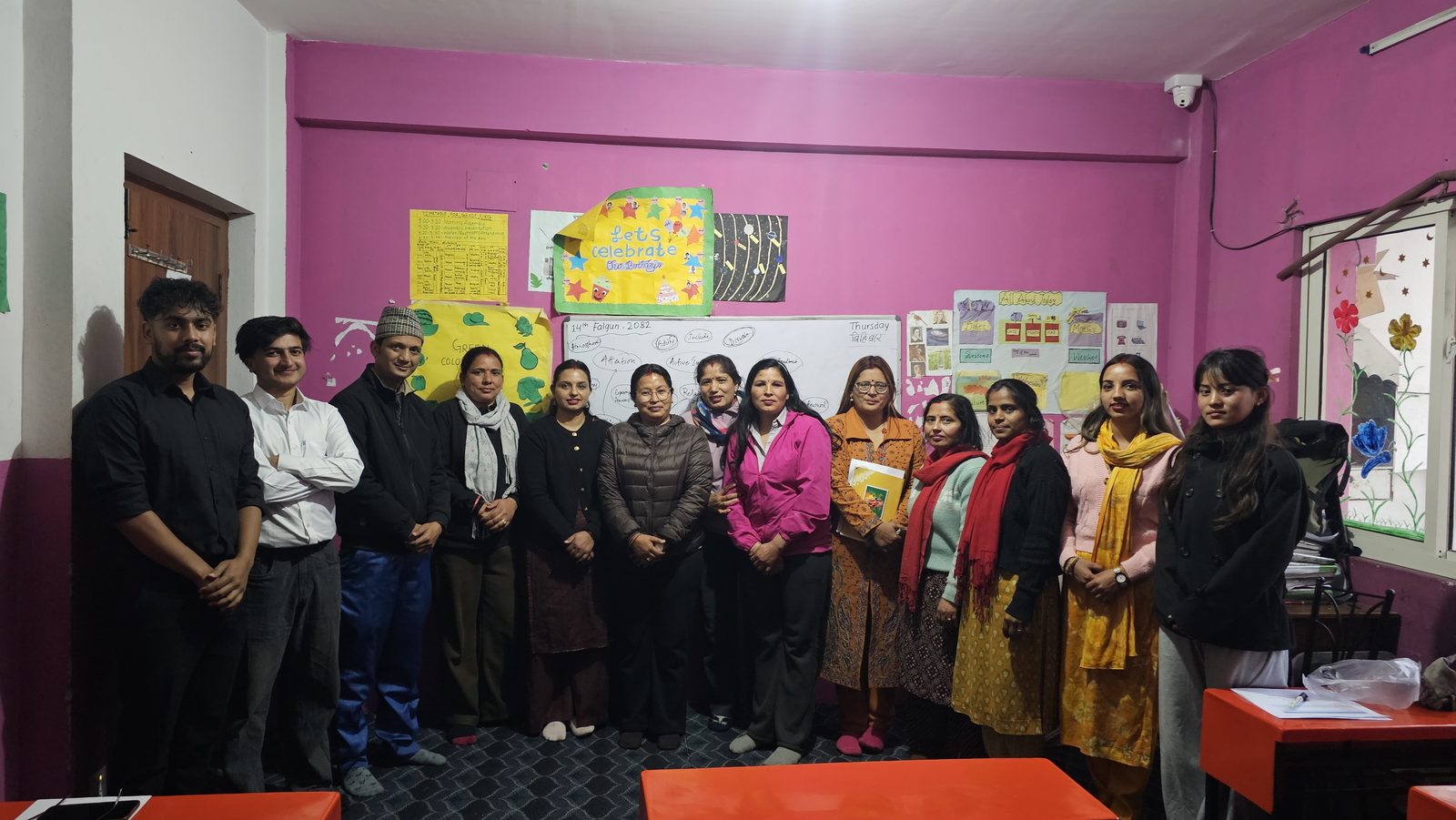
The Stellaa team with teachers after a training session.
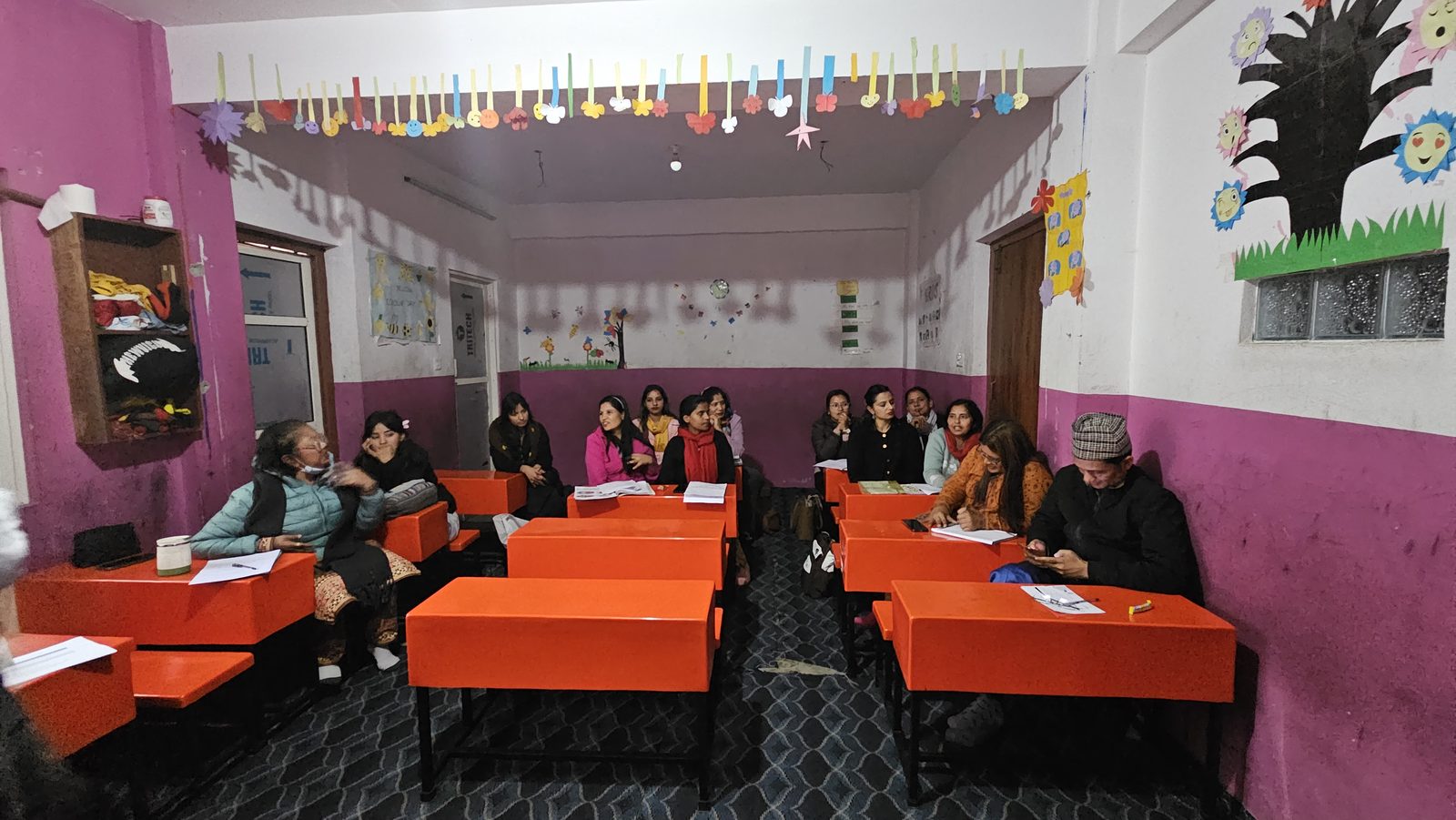
Female teachers seated at desks during a training session.
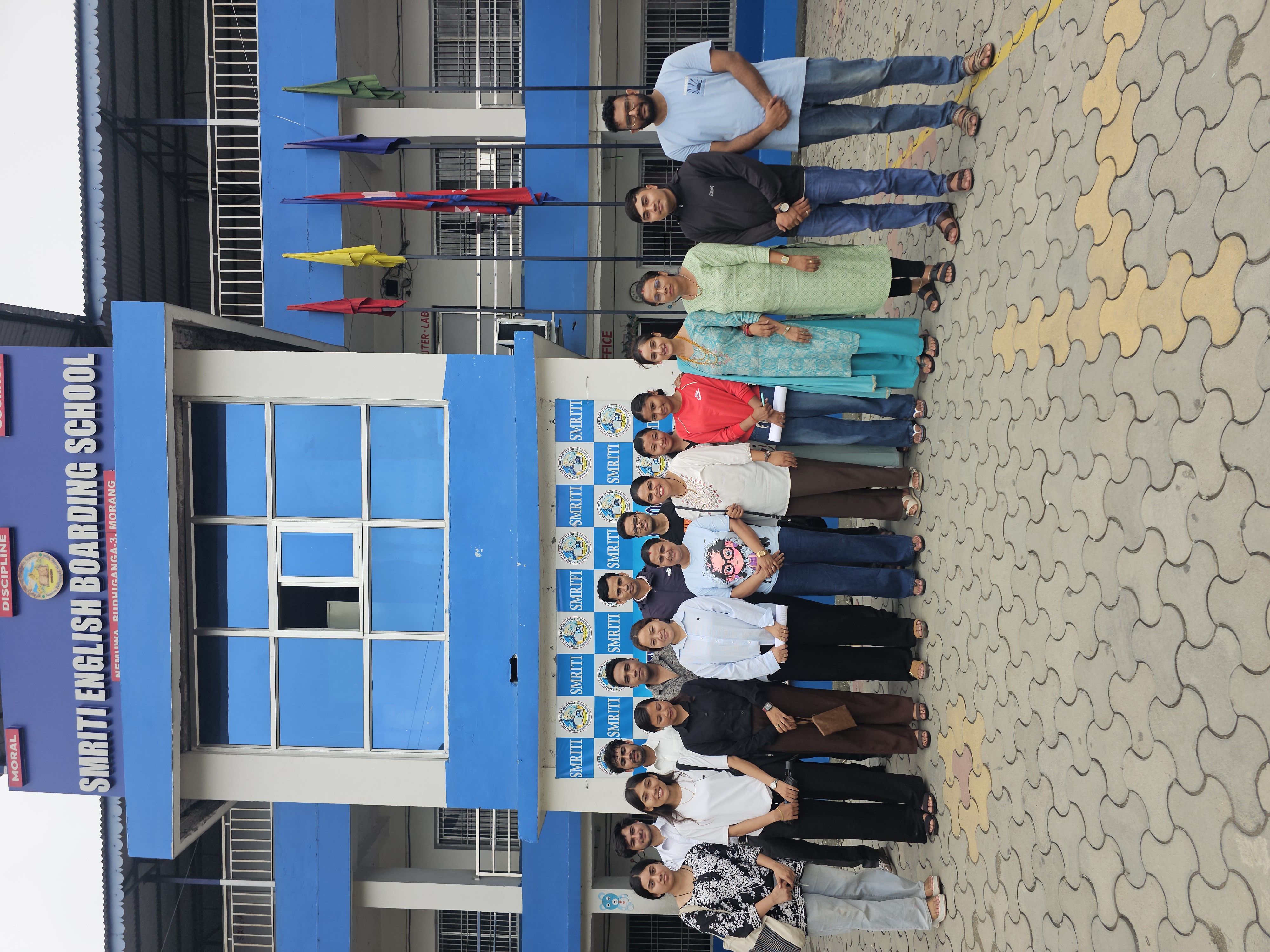
Teachers and the Stellaa team at Smriti English Boarding School.
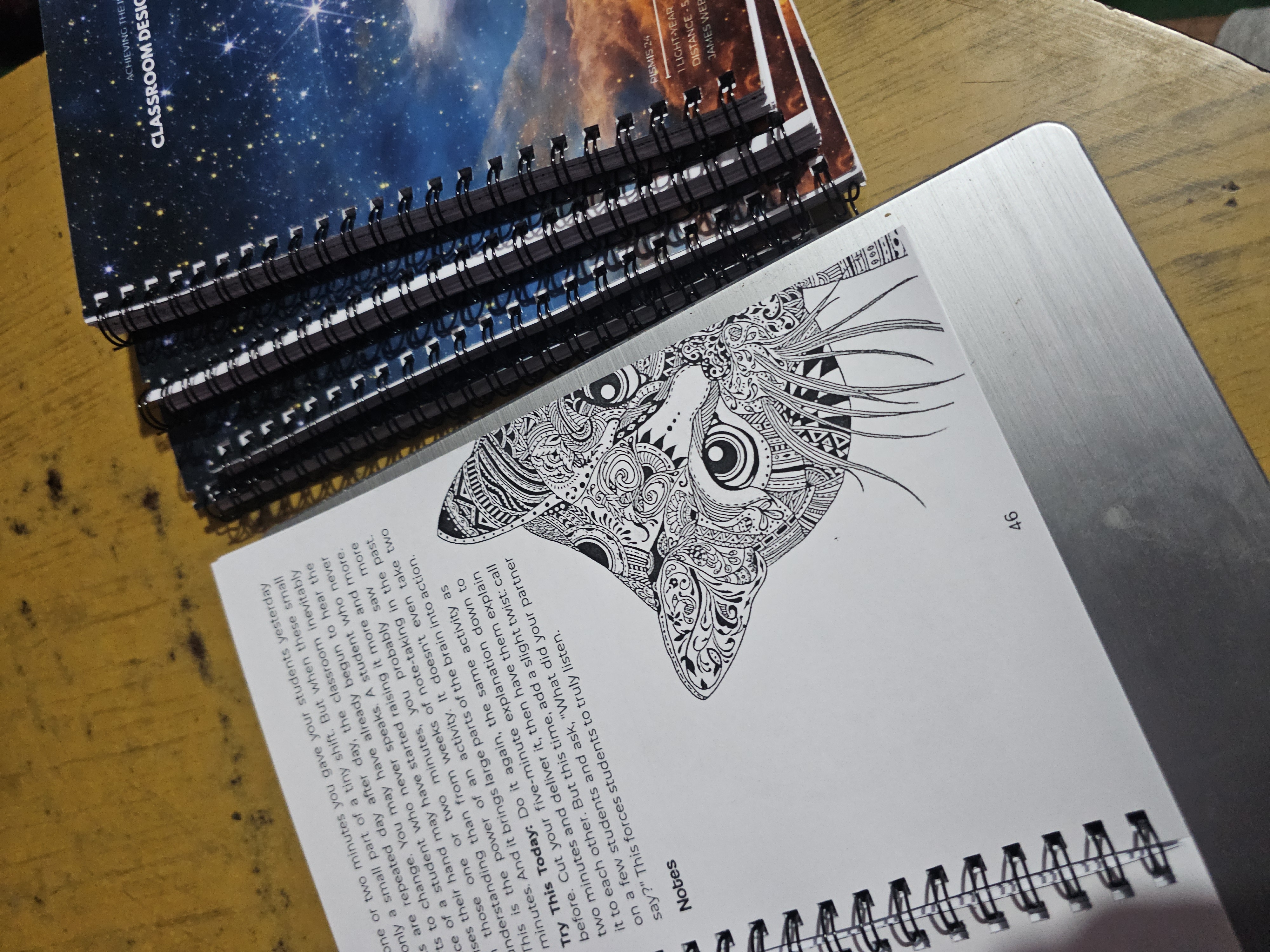
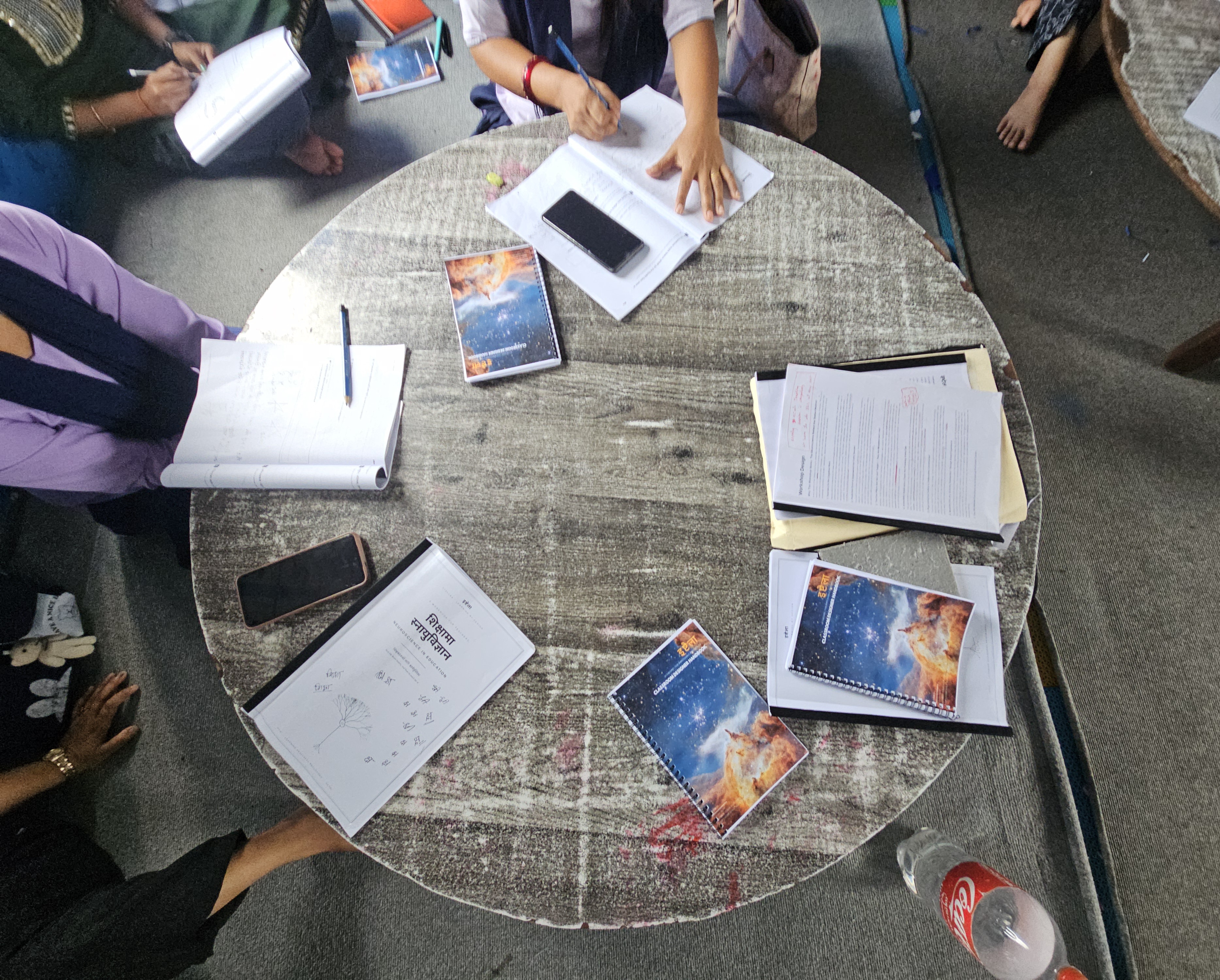
Workbooks and notebooks on the table during group activities.
The team with students outside at Smriti English Boarding School.
Smriti English Boarding School, Rangeli-3, Morang.
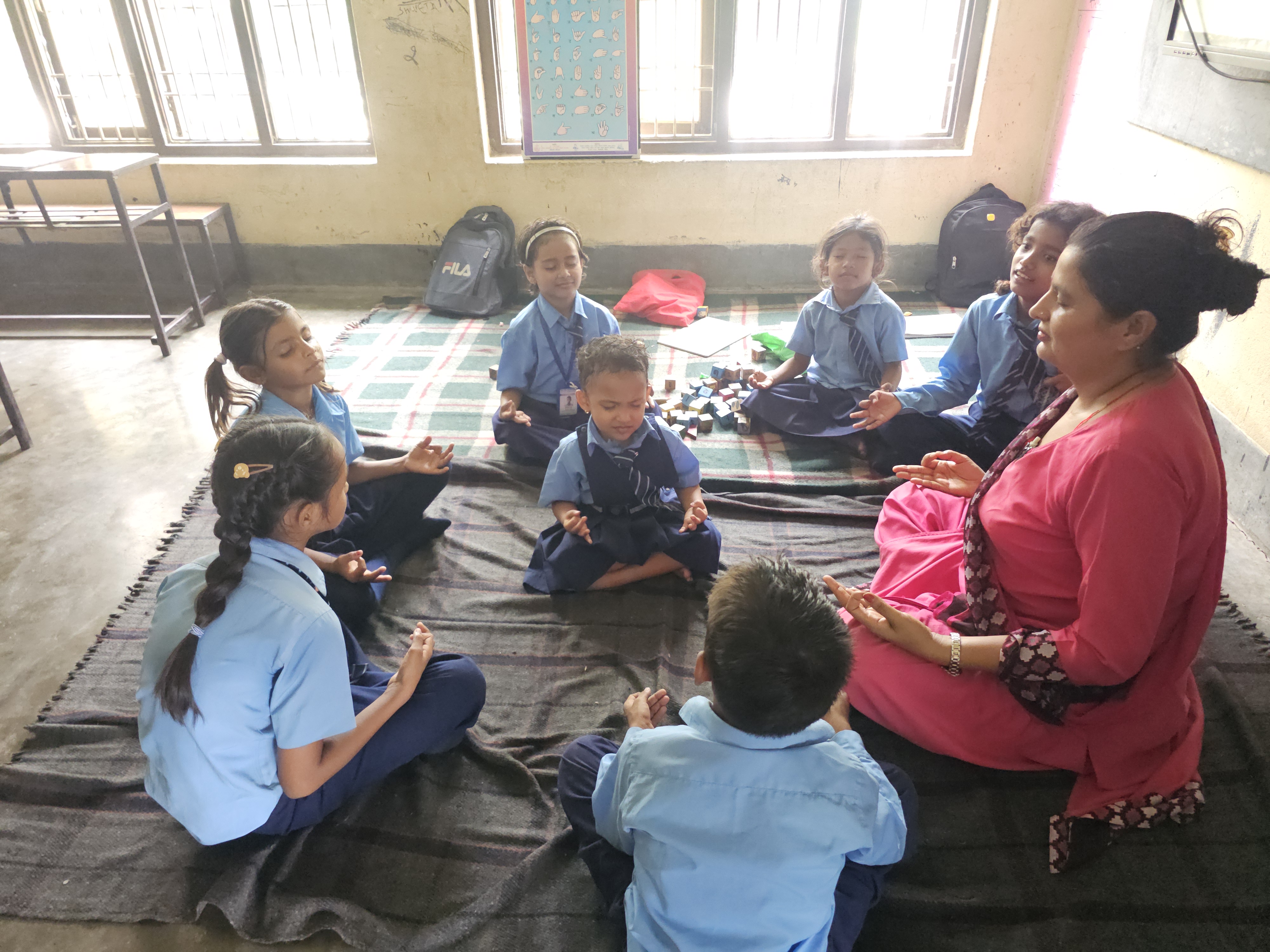
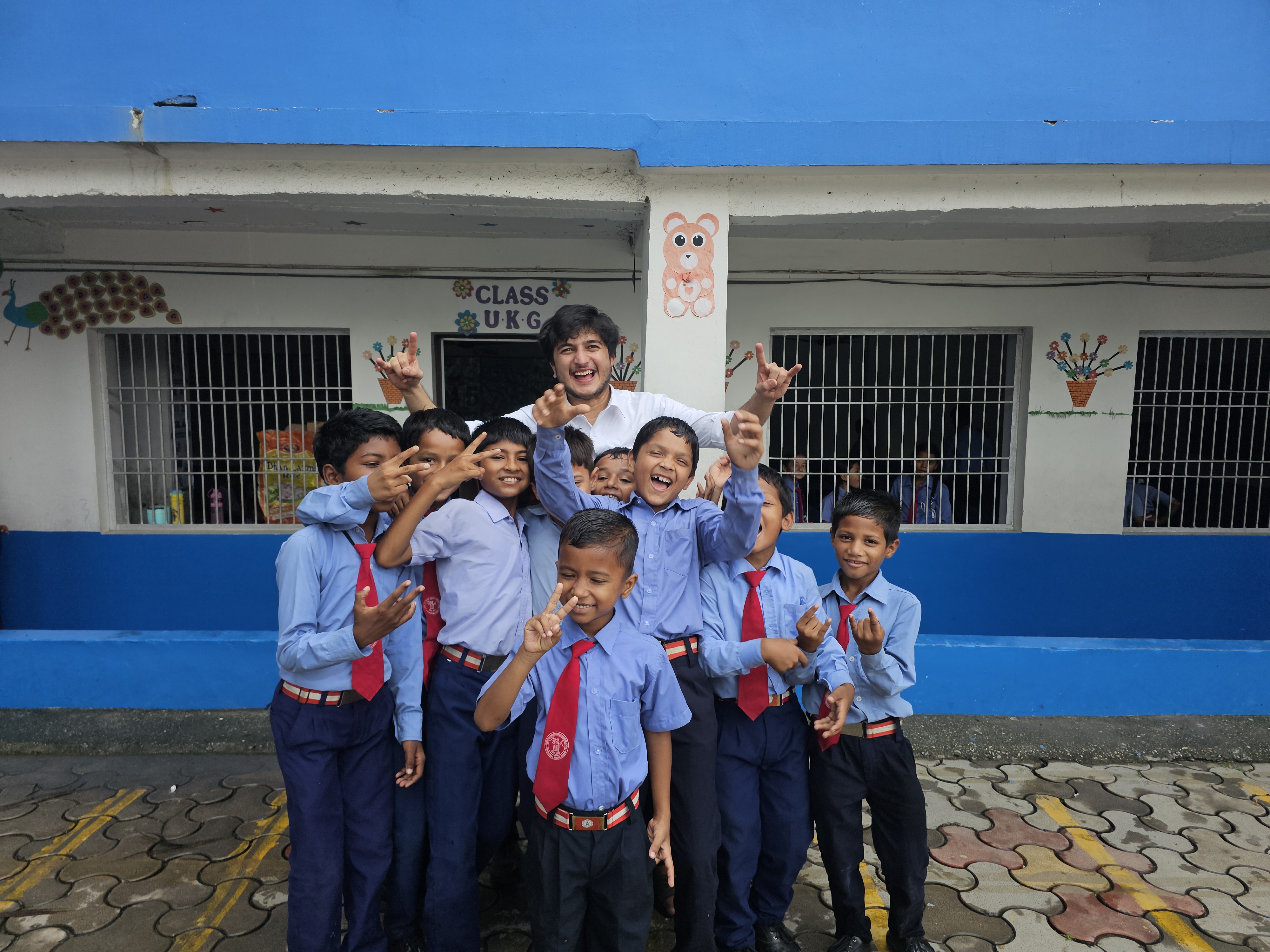
Students outside the U.K.G. classroom at Smriti English Boarding School.
Every face here is a classroom. Every classroom is a future.